
What Is SEO? Guide to Search Engine Optimization
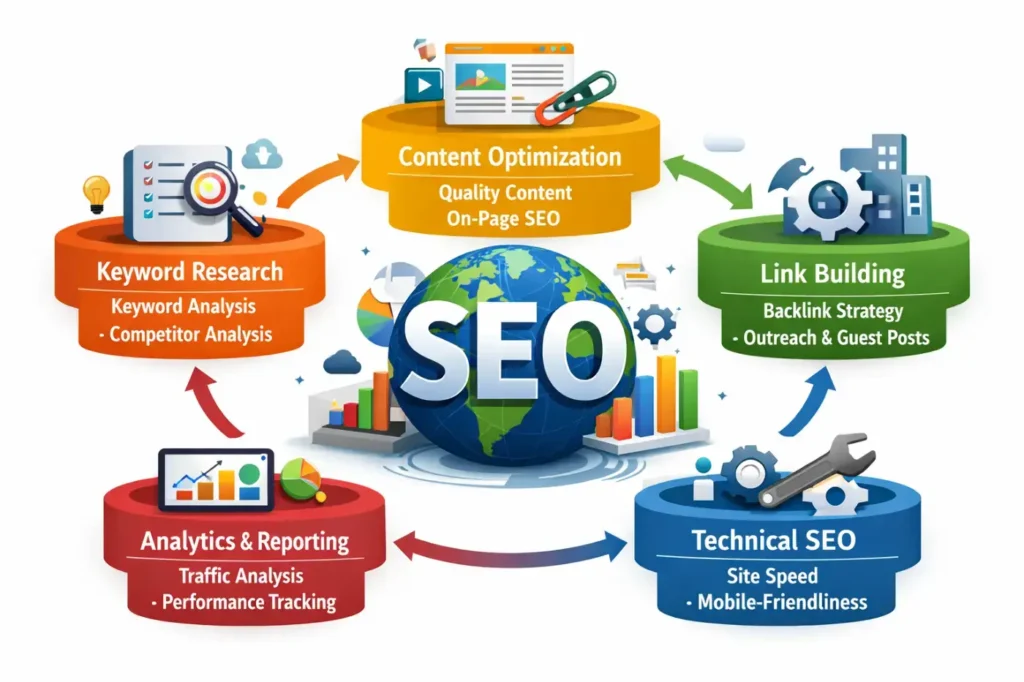
What is SEO and how does it work?
SEO stands for Search Engine Optimization, the process of improving website visibility, lead, and rankings to drive organic traffic from search engines. SEO focuses on optimizing content, website structure, and overall performance to attract more organic (unpaid) traffic.
SEO is important for beginners, bloggers, startups, and businesses of all sizes. It allows smaller websites to compete with larger brands, brings consistent traffic without paid ads, and builds trust by appearing at the top of search results.
Since most online experiences begin with a search engine, SEO has become one of the most powerful digital marketing strategies. Whether you run a blog, eCommerce store, or local business website, understanding SEO helps increase visibility, traffic, and long-term success.
How does SEO work?
SEO works by helping search engines understand your website and match it with relevant user searches.
This process happens in three main stages: crawling, indexing, and ranking.
Crawling: How search engines discover content
Search engines use automated programs called crawlers or spiders to explore the web. These bots move from one page to another by following links and discovering new or updated content.
If your website has a clear structure and fresh content, search engines can crawl your pages more efficiently.
Best practices to improve crawling:
- Use a clean and organized site structure
- Add internal links between related pages
- Create and submit an XML sitemap
- Update content regularly
- Fix broken links and crawl errors using Google Search Console
Indexing: How search engines store content
After crawling, search engines analyze your pages and store them in a massive database known as the index. Only indexed pages are eligible to appear in search results.
If your page isn’t indexed, it won’t rank—no matter how good the content is.
Tips to improve indexing:
- Use clear headings with relevant keywords
- Optimize meta titles and descriptions
- Add descriptive image alt text
- Avoid duplicate or thin content
- Monitor index coverage in Google Search Console
Ranking: How search engines order results
Once pages are indexed, search engines rank them based on relevance, content quality, authority, and user experience. Pages that best satisfy user intent appear higher in search results.
Ways to improve rankings:
- Create high-quality, intent-focused content
- Improve page speed and mobile usability
- Earn backlinks from trusted websites
- Track performance using SEO tools like Moz and Google Analytics
See how Moz transforms your SEO with AI-powered insights
Why is SEO important?
SEO helps your website reach the right audience at the right time. Beyond visibility, SEO improves user experience, increases trust, and drives long-term growth.
Increased traffic
Higher rankings mean more visibility and more clicks from users actively searching for your products or services. Unlike paid ads, SEO traffic grows steadily and delivers long-term value.
Rank for more SERP features
SEO allows your content to appear not only in standard results but also in SERP features, such as:
- Featured snippets – Quick answers displayed at the top of search results
- People Also Ask (PAA) – Related questions that position your site as an authority
- Image and video packs – Visual content that increases engagement
- Generative search results (AI Overviews) – AI-generated summaries shown above results
Research shows that large language models prefer authoritative content. Strong SEO increases your chances of appearing in AI search results, ChatGPT responses, and AI Overviews.
Providing a great user experience
SEO and user experience go hand in hand. Search engines favor websites that are fast, mobile-friendly, and easy to navigate.
This is measured using Core Web Vitals:
- Loading performance (LCP): How quickly content appears
- Interactivity (FID): How fast users can interact
- Visual stability (CLS): Prevents layout shifts during loading
Optimizing these metrics improves engagement and rankings.
Power your SEO workflow with smarter AI insights
What are the types of SEO?
SEO is divided into three main types: on-page SEO, off-page SEO, and technical SEO.
On-Page SEO
On-page SEO focuses on optimizing individual pages so search engines and users understand them better.
Key elements of on-page SEO:
- Keyword optimization in titles, headings, and content
- Meta title and meta description optimization
- High-quality, original content
- Image and video optimization with alt text
- Internal linking between related pages
- Clear and descriptive URL structure
Off-Page SEO
Off-page SEO includes actions taken outside your website to improve authority and trust.
Off-page SEO strategies include:
- Building high-quality backlinks
- Guest posting on authoritative websites
- Social media promotion
- PR and influencer outreach
- Brand mentions across the web
- Local SEO citations for local businesses
Technical SEO
Technical SEO ensures search engines can crawl, index, and rank your site efficiently.
Essential technical SEO tasks:
- Logical site architecture
- Fast page loading and Core Web Vitals optimization
- Mobile-friendly design
- Structured data (schema markup)
- Robots.txt and XML sitemap management
- HTTPS security implementation
Never miss an issue impacting traffic on your site
Find and fix technical SEO issues fast with Moz Pro.
How to do SEO: Best practices for beginners
1. Find relevant topics with keyword research
Keyword research helps you understand what your audience is searching for.
Keyword research tips:
- Start with seed keywords
- Use tools like Moz Keyword Explorer
- Focus on user search intent
- Target long-tail keywords
- Analyze competitor keywords
2. Create helpful content
Content is the foundation of SEO. Helpful content answers questions, solves problems, and builds trust.
Content creation tips:
- Write for users first, search engines second
- Address real pain points
- Use clear headings and short paragraphs
- Keep content original and accurate
- Update content regularly
- Add visuals for better engagement
3.Optimize on-page SEO
On-page optimization helps both users and search engines understand your content.
On-page SEO checklist:
- Title tags under 60 characters
- Compelling meta descriptions
- Optimized image alt text
- Clean, keyword-rich URLs
4. Build links from relevant websites
Backlinks signal authority and trust to search engines.
Link building methods:
- Publish link-worthy content
- Guest blogging
- Outreach to industry websites
- Fix broken links
- PR and brand mentions
SEO tools to implement what you've learned
- Google Search Console
- Google Analytics
- Moz Keyword Explorer
- Moz Link Explorer
- MozBar
- Moz DA Checker
Frequently asked questions about SEO
Can you do SEO by yourself?
Yes, SEO can be done самостоятельно. By learning fundamentals, using free tools, and practicing on live websites, you can gradually improve your skills and results.
What is an example of SEO?
An example of SEO is optimizing title tags and meta descriptions with relevant keywords so a page ranks higher for specific searches.
Is SEO free or paid?
SEO itself is free, but it requires time, effort, and consistency. Paid tools and professional services can help speed up results but are not mandatory.
Start learning SEO now!
Enter any domain to explore key SEO metrics like Domain Authority, ranking keywords, top pages, and competitive insights—all in one place.